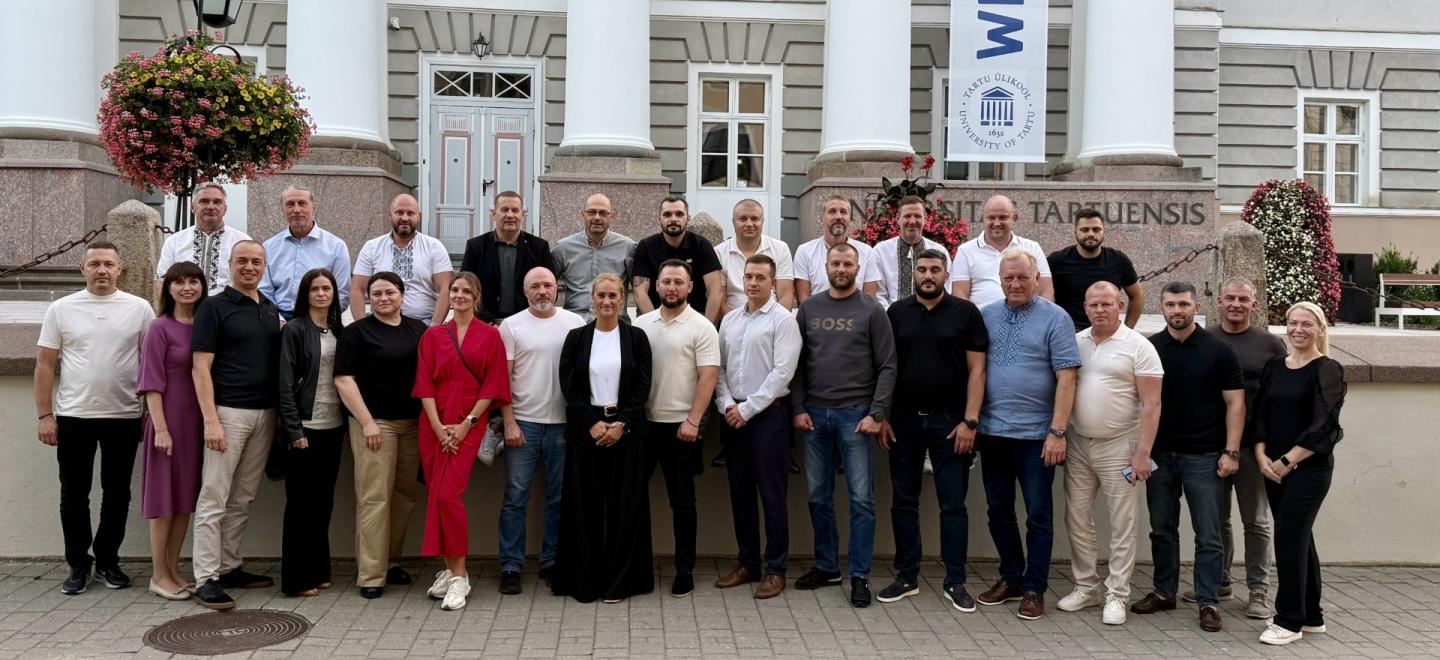
7500 Ukrainian police officers to benefit from Estonian training programme

This week, the Estonian Centre for International Development (ESTDEV) and the Police and Border Guard Board (PBGB) launched a collaborative project in which Estonian police officers will train their Ukrainian counterparts.
The project aims to share the experience of the Estonian police force to support the improvement of the rule of law in Ukraine and increase trust in Ukraine’s police force.
Kristi Mäe, Deputy General Director at the PBGB, said that her Ukrainian colleagues highly appreciate Estonia's experience and professional practices in developing the police force from the restoration of independence to the present day.
“The beginnings of the Estonian and Ukrainian police are similar, and we rebuilt the system after the collapse of the Soviet Union. We have reformed the management of the Estonian police force and are committed to providing the people of Estonia with the best possible security. Ukraine has the same goals, which is why we are sharing our experience and best practices with them,” said Mäe. “This is the second time the project is taking place, and the feedback from our Ukrainian colleagues from the first round was very positive. We know that they highly appreciate the content of the workshops, as we began this second training programme at Ukraine's request.”
During the project, the PBGB will train a total of 84 top and mid-level Ukrainian police leaders from the State Police Headquarters, the patrol force and police schools. Together, these individuals supervise nearly 7,500 police officers in Ukraine. From now until 2027, six study groups from Ukraine will visit Estonia.
This week, the first 14-member study group of Ukrainian police officers visited Tartu. During the week-long programme, police chiefs received an overview of the reestablishment of the Estonian Police, management reforms and the implementation of modern management principles, as well as organisational culture, internal control and future developments. Experts from the Estonian Police were on hand to share their knowledge and experience throughout the study visit.
According to Mäe, the training programme supports Ukraine's integration with the European Union.
“A democratic country must have a strong and independent police force, and modern leadership practices are important for this. This project will develop Ukraine's internal security sector, revitalise its police leadership culture and improve cooperation with other law enforcement agencies,” said Mäe. “Gender equality is also important to us when implementing this project, meaning that there will be female leaders in each study group among the trainees. We will also pay attention to topics related to the green and digital revolutions, as well as respect for human rights. Strengthening cooperation between the police forces of the two countries is also important.”
Eva-Maria Liimets, ESTDEV's programme manager for Democracy and Rule of Law, noted that Estonia understands the importance of the police's role in supporting the rule of law.
“Estonia is aware of the importance of professional and independent police from the perspective of both the safety of people and the credibility of the state. Such projects give Ukraine momentum on its path to the EU, as they strengthen the rule of law and help build institutions based on Western values,” said Liimets. “We are pleased that the Estonian Police and Border Guard Board is ready to share its experience and support the development of the Ukrainian police force in cooperation with ESTDEV and local partners.”
This is a follow-up project to one carried out from 2023 to 2025, in which 34 Ukrainian police chiefs received training.
Related articles