Eye on Moldova: Estonia’s development cooperation projects support future fellow EU member state

Moldova began official European Union accession negotiations a little over a year ago. Having gone through the process itself, Estonia understands Moldova’s needs and is doing everything it can to support the country’s EU integration process.
Moldova has long been one of Estonia’s main development cooperation partners. Since 2000, Estonia has implemented over 300 projects across the country. Now, as Moldova proceeds with EU negotiations, the country needs even more support to counteract Russian cyberattacks and disinformation campaigns, especially as parliamentary elections are coming up in September.
Current Estonian-funded projects all bolster Moldova’s future as an EU member state, focusing on three main categories: cybersecurity and e-governance, democracy, and education.
Training the next generation of cybersecurity experts
When Russia invaded Ukraine in 2022, it also launched a simultaneous attack on Moldova’s digital infrastructure. Then, during Moldova’s 2024 presidential elections and EU referendum, Russia launched a massive disinformation campaign, using digital means in an attempt to influence the vote and cast doubt on the democratic process.
Since then, cyber threats have continued, and Moldova has responded by implementing training programmes to ensure that future cyber experts are equipped with the skills to respond effectively. In 2024, Moldova partnered with Tallinn University of Technology (TalTech) and the Estonian Centre for International Development (ESTDEV) to open the National Institute of Innovations in Cybersecurity, also known as Cybercor.
Education is a tried-and-true path to improved cybersecurity. Andres Ääremaa, ESTDEV’s programme manager for Digital Transformation and Cybersecurity, said Estonia launching a master's degree in cyber defence at TalTech was a critical part of the response to Russia's 2007 cyberattack on Estonia.
“Now, we are sharing that experience with Moldova,” Ääremaa said. “The creation of Cybercor and the training of young people is more than just Estonia’s technical support; it is a partnership for a forward-looking and secure digital state."
ESTDEV and TalTech have also worked together to provide cyber defence courses in Estonia for Moldovan students in addition to webinars and tabletop exercises organised by Estonian experts for Moldova's Technical University students. These training exercises lay the foundation for a more systematic approach to cybersecurity in Moldova. Future projects will ensure Moldova’s digitalisation efforts - and its democratic processes - are protected by a robust cyber defence.

Successful Ukrainian capacity-building programme for local governments to be adapted for Moldova
Moldova is actively moving towards joining the EU, supported by a massive €1.9 billion EU aid package and a range of funding sources, including investments in infrastructure, economic development, innovation and governance reform.
Local government officials need support to be able to plan development projects that align with EU standards and take advantage of EU funding opportunities. Without this support, local municipalities will not be able to fully benefit from EU integration.
Ukraine, an EU candidate state like Moldova, faces the same challenge. In response, ESTDEV, the consulting company Civitta Ukraine and the University of Tartu worked together to develop IMPACT.Zhytomyr, a training programme for local government officials to create strong grant applications, access funding opportunities and effectively implement development projects.
According to Margus Gering, ESTDEV’s regional head for Europe, IMPACT.Zhytomyr was such a success that it inspired the development of a similar programme for Moldova.
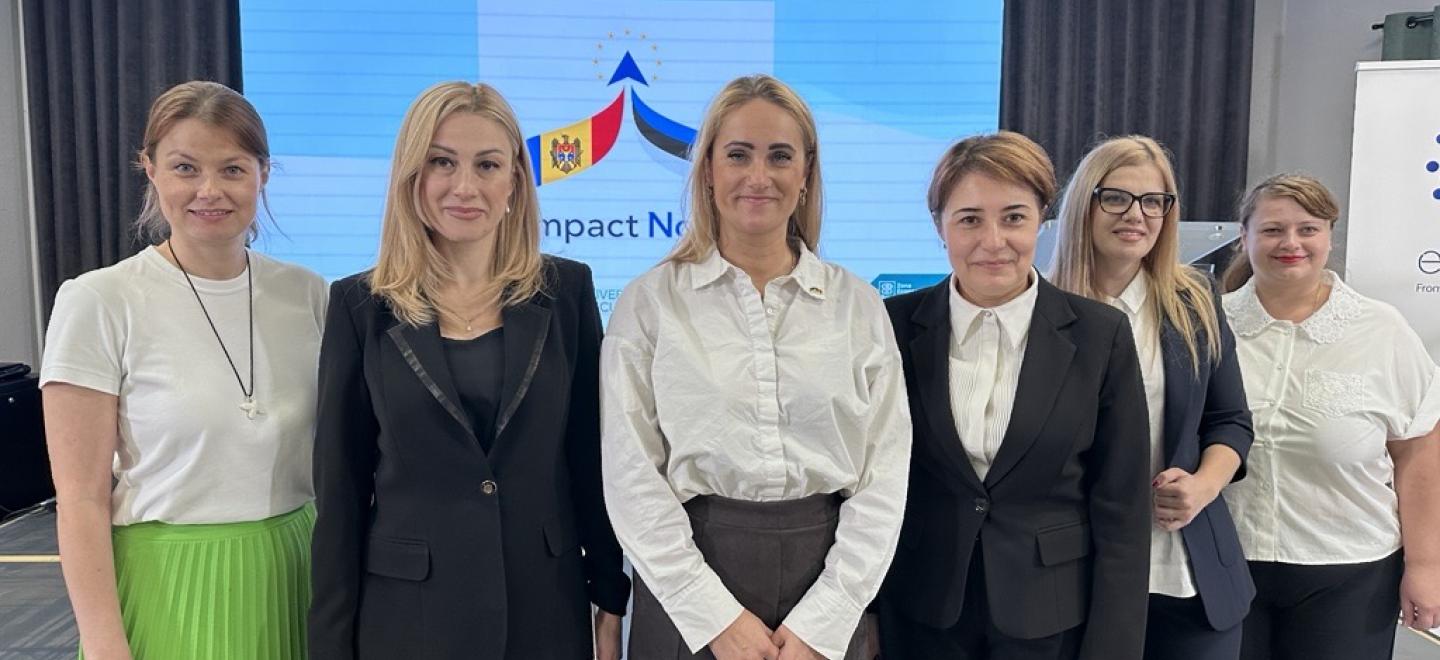
Modeled after IMPACT.Zhytomyr, ESTDEV and Civitta Moldova have created IMPACT.Gagauzia to train at least 100 government officials from the ATU Gagauzia Development Region. The project will run until December 2025.
“IMPACT.Gagauzia will help local municipalities and local communities think more strategically how to develop the local community and deliver better services for their citizens,” said Gering. “The programme will focus on how to develop a good quality project, how to design the project itself and how to ensure quality implementation. I think the most important outcome will be that each and every community will be empowered to access EU structural funds and grants and attract investments to the Gagauzia region.”
Digital tools and education reform to reinforce concept of knowledge as power
After last year’s visit to Estonian schools, Moldova’s Minister of Education, Dan Perciun, has decided to use certain aspects of Estonia’s education system to jumpstart education reforms in his own country.
Part of these reforms includes making sure teachers and schools have access to digital tools and know how to use them effectively. However, Perciun knows that digital tools alone won’t alleviate Moldova’s education woes. In an interview earlier this year, he said, “Digitalisation for the sake of [digitalisation] won’t change anything. It should be a tool, not the goal.”
Estonian-funded projects aim to make education in Moldova more engaging for students and more relevant for living and working in today’s globalised world. Officials like Perciun understand that a better educated population will be better equipped to overcome Russian efforts to undermine Moldovan democracy.

ESTDEV’s recent education projects in Moldova:
Examodo examination software from the Estonian company Agilist OÜ as part of its national testing support for schools - The Education and Youth Board of Estonia (HARNO) collaborated with ESTDEV to provide e-assessment tools to help teachers and students to employ new technologies and develop digital skills and improve the education system's overall efficiency.
A digital skills training and assessment course based on the Estonian experience but tailored to the needs of Moldovan teachers created by Tallinn University researcher Mart Laanpere in collaboration with UNICEF and ESTDEV - Those who complete the course will become digital ambassadors, sharing their new-found knowledge and skills with their local school communities.
The EST4MORE project created by researchers from the University of Tartu and funded by ESTDEV for Moldovan educators, PhD and master’s students - The project combines online seminars with study visits to Estonia and covers essential skills for modern educators, like designing interactive lessons and best practices in education.
“Moldova’s teachers are navigating a rapidly changing digital landscape with limited resources and limited access to professional development and training,” said Kristi Kulu, ESTDEV’s programme manager for Education. “By funding projects to provide a new mindset and the right tools, we’re ensuring that Moldovan students receive high-quality education aligned with European standards.”
Accompanying Moldova along its path to the EU
Estonia and Moldova have a shared history. However, Estonia has already been able to reap the benefits of EU membership, while Moldova is still working to meet that ambition. Estonia understands the accession process and has experts who partook in EU negotiations still working in the field, making it uniquely positioned to support Moldova as it works to become part of the EU family.
“Estonia’s support to Moldova is reflected not only by political, diplomatic or economic means; Moldova is one of Estonia’s strategic and long-term development cooperation partners,” said Gering, during a recent interview on the Moldovan TV programme, Obiectiv Comun. “Moldova has clearly expressed its willingness and readiness to join the European Union. ESTDEV, together with its partners, aims to meet this goal by implementing projects and making a meaningful effort to help Moldova on this path.”
Related articles