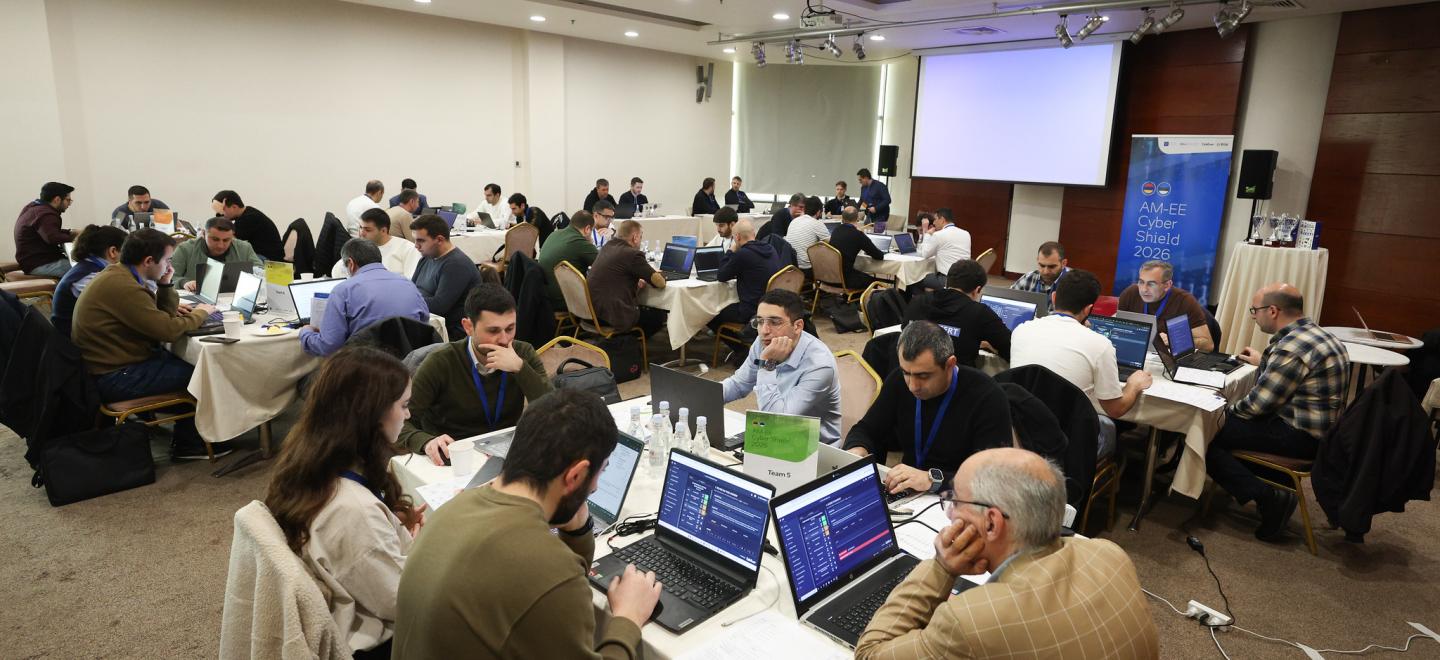
Executives from the Ugandan public sector receive cybersecurity awareness training from Estonian experts

To support the implementation of Uganda's national cybersecurity strategy, Estonian experts developed training courses to integrate cybersecurity into strategic management decisions of the Ugandan government and critical infrastructure institutions.
Cybersecurity is both an IT issue and a crucial aspect of any organisation’s strategic management. In 2024, Estonian experts from the European Cybersecurity Initiative (ECSI) conducted a cyber readiness analysis of Uganda forthe European Union-East African Union Joint Digital Development Program, which identified many gaps in the implementation of Uganda's national cybersecurity strategy. However, ECSI’s analysis also found that despite the lack of cyber awareness at the managerial level, there is an earnest desire to improve.
ECSI designed a project to address this challenge. The project aims to improve the level of cybersecurity amongst executive officials in the government and critical infrastructure sectors of Uganda by raising awareness of cybersecurity issues at the strategic decision-making (management) level, helping them understand risks and make informed decisions.
"Although our experts have worked in Africa before, for ECSI as a whole, implementing such a project was a first-time experience. In that respect, everything went smoothly, and this was certainly thanks to our good local partner, Milima Cyber Academy. We successfully gathered the target group of participants for the training. During the project, we also gained experience and insight into the local cybersecurity situation and maturity level," said Markus Münzer, project manager and trainer at ECSI.
A total of 38 people from 28 organisations received training through the project. Important topics covered in the training sessions were the basics of executive-level cybersecurity, risk management and business impacts, compliance requirements and obligations, crisis resolution, and a holistic security culture.
“Our collaboration with the ECSI team played a pivotal role in the project’s success. The resources and support provided by their organisation enabled us to tailor the training content to specific needs, resulting in a more engaging and impactful learning experience. The programme cultivated a collaborative learning environment that encouraged participants to exchange insights and build a strong network of cybersecurity professionals,” said Emmanuel Chagara, CEO of Milima Cyber Academy.
“The training delivered measurable outcomes for participants. Post-training evaluations revealed a 92% satisfaction rate, with many highlighting the practical, real-world relevance of the skills acquired. We are deeply grateful to ECSI and ESTDEV for their partnership and support, and we look forward to continuing our collaboration in the future,” Chagara added.
The engaging interactive format, along with a practical tool created explicitly for cybersecurity leadership training known as the STRATEX platform, will remain available for local partners to use in the future. This will help ensure a sustainable training format that organisations can use to strengthen their cybersecurity.
The ECSI project received funding through the ESTDEV 2025 Africa Priority Countries Call for Proposals, with one of its goals being to support the implementation of sustainable and systematic digital transformation, as well as the development of digital skills in target countries.
Estonia's goal in Uganda is to contribute to the country's development plans, as outlined in Uganda's strategic document, "Vision 2040". Digitalisation is seen as one of the main catalysts for this vision, and in many ways, solutions are sought by looking to Estonia's experience in building an e-government. The priority areas of Estonian development cooperation in Uganda are the digital transformation, entrepreneurship and education.
Photo: Milima Cyber Academy
Related articles