Estonian-funded project improving digital skills of primary school teachers across Uganda
The digital divide in Uganda is vast, but an Estonian-funded training programme is working with school leaders, teachers and students at five primary teachers' colleges to improve digital competencies in classrooms across the country.
As part of this year's African call for proposals, Estonian Centre for International Development (ESTDEV) has provided €142,417 to fund a project through Mondo to develop Ugandan primary school teachers' digital skills in partnership with Innowise, an Estonian company dedicated to providing professional development for those who work in adult education; the Ugandan Ministry of Education and Sports; and five primary teachers' colleges in Uganda: Moroto Core Primary Teachers' College, Kabale Bukinda Core Primary Teachers' College, Sancta Maria Core Primary Teachers' College, Soroti Primary Teachers' College, Kabulasoke Core Primary Teachers' College.
Changing mindsets is the first step to developing digital compentencies
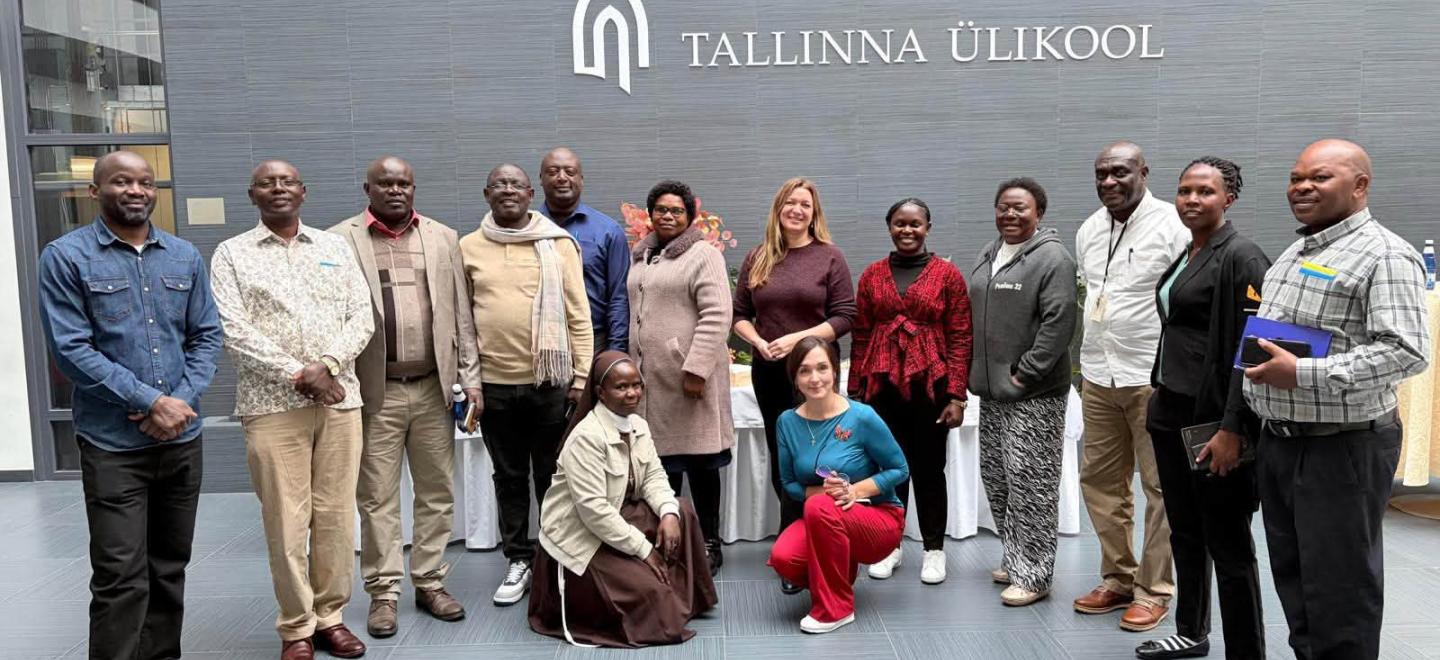
Uganda faces a range of challenges in incorporating digital tools in the classroom, as Constance Agasha of Kabale Bukinda Core Primary Teachers' College and Mercy Sharon Nansubuga of Soroti Core Primary Teachers' College outlined during their study visit to Estonia this month.
Agasha and Nansubuga both discussed the infrastructure issues they face—unreliable electricity, patchy internet, limited access to devices —but the primary issue both directors have with getting staff to use digital tools is resistance to change. Some teachers are near retirement; others only want to teach the way they themselves were taught. Either way, they need to see how they and their students will benefit from these new tools.
This is where Estonia's experience with digitalisation came in handy. Kaarin Peet, one of the co-designers of the study visit programme from Innowise, has seen firsthand the importance of change management through her work in Estonian schools and incorporated the lessons she learned when planning the programme. "You can give people robots and routers and train them how to use it, but change actually depends on how ready people are," Peet said. "The situation is different, but people in Estonia and Uganda are not that different. The secret is this mindset shift."
Newly acquired digital skills put to use before training ends
Many of the tutors training current and future teachers at Uganda's teachers' colleges often lack digital skills themselves. This not only means they can't teach teachers how to use digital tools, but it also means the colleges' students can't always access their coursework. For example, students at the teachers' colleges are often already working as teachers and then travel to the college to complete their coursework on weekends. If, for some reason, they can't attend classes in person, they fall behind. Now, with the digital skills training provided by Estonia, tutors at the teachers' colleges are able to run online classes and provide learning materials digitally rather than only on paper.
During the training workshops held in August, Veronica Faith Nuwamanya, Mondo's country coordinator for Uganda, saw tutors from the teachers' colleges putting their newfound knowledge into practice right away. Most participants attended the workshop from different teachers' colleges, but as working teachers, they still had tasks to complete even though they weren't at their respective schools. "I would already notice the tutors were doing online classes even while we were having the trainings, because while we had a break, you would see them step out, sit somewhere outside, and then they were having these online lessons with their students," said Nuwamanya.
Study visit to Estonia inspires school leaders
The training programme has 62 participants: 50 teachers from the five teachers' colleges, 10 directors and board members from the participating institutions and two representatives from Uganda's Ministry of Education and Sports. Agasha highlighted the importance of including leadership in digital skills training. As director, she needs to encourage tutors to use these digital tools, as many are using them for the first time. "For me, as somebody who is leading them, I can begin saying, 'Why not do this? What about if we do it this way?' But you know, when you don't know, you will not help. I appreciate the way the training was designed, because it involved those of us who are going to supervise others. If I'm not trained, there's no way I can follow up and give help or encouragement," said Agasha.
During the study visit, Nansubuga was inspired by Estonia's competence model for school leaders and how leadership can set the tone for both the teachers' colleges and schools. "I loved the model because it supports school development, professional growth and student learning and well-being. Those three, if nurtured right from the start, can work. We have a Principals' Association of Uganda, but it doesn't work the way this one does. Besides what we learned about IT, I think this association in Estonia has broadened my knowledge, and now I see things differently. When you want change in an institution, you begin with the head. Once the head is converted, then it will go down," Nansubuga said.
Women in education are women in tech
According to UNESCO, teaching is a gendered profession, as women make up about 68% of the world's primary school teachers. Training teachers to use digital tools in the classroom is one way to provide girls with positive STEM mentorship. Furthermore, women are under-represented in school leadership positions. Teachers with high digital competencies may have a better chance at moving into school leadership positions, so this type of professional development programme has the potential to lessen that gap.
During the study visit to Estonia, Nuwamanya was impressed by the number of women teachers who were leading digital initiatives at their schools. "I'm also happy to see women here really involved in tech. Yesterday, we were with a lady at one of the schools in Pärnu; she didn't have any background in tech, but now she's one of the leading tech teachers at the institution. She was an inspiration for me. These are stories we can carry home and use to inspire women teachers to get involved in tech too," said Nuwamanya.
Training the trainers as a step towards sustainable change
Across the five teachers' colleges participating in the project, there are about 200 staff members and nearly 770 students who are studying to become primary teachers in the future and who will pass on their digital skills to colleagues and their own students.
However, the project's influence will extend beyond that. The participating teachers' colleges provide professional development and assistance to several schools in the surrounding region, accounting for an additional 300 staff members and 5,000 students. According to Nansubuga, the project has the potential to improve digital competencies for them as well: "[Soroti Core Primary Teachers' College] has an outreach arm that is helping. In every outreach, we have coordinating tutors. Once these coordinating tutors learn this ICT, they also go to the catchment areas and teach the teachers. The training is moving toward the whole country. And these tutors come from far, from different districts for this training, and as they go back, they will spread it."
ESTDEV's head of Education, Gertha Teidla-Kunitsõn, has noted that quality professional development is fundamental in creating sustainable change in education. "To make sure that the education students in Africa receive is the best possible, we must make sure the teachers have the right training and skills to unlock the potential of every student they meet. This has become especially important in times when digital skills and digital transformation are shaping every aspect of lives across the globe," Teidla-Kunitsõn said.
Related Articles