European Unity in Action: Estonia and Ukraine work together to align Ukraine’s prison officer training programme with European standards

Ukraine’s legal and prison system reforms, which are a prerequisite for EU accession, are not merely bureaucratic processes; they part of Ukraine’s broader plans to improve the country’s security and resilience. To move towards achieving this goal, faculty and staff from Ukraine’s Academy of Penitentiary Service spent a month in Estonia learning from best practices from their Estonian counterparts.
ESTDEV spoke with Volodymyr Spivak (VS), head of the educational department of the Academy of the Penitentiary Service, about his experience in Estonia. Overall, he said that the main takeaway for his team was being able to see how cooperation, mutual trust, and respect can turn ideas into reality. You can read the rest of the in-depth interview below.
What experience or activity during these four weeks made the strongest impression on you and why?
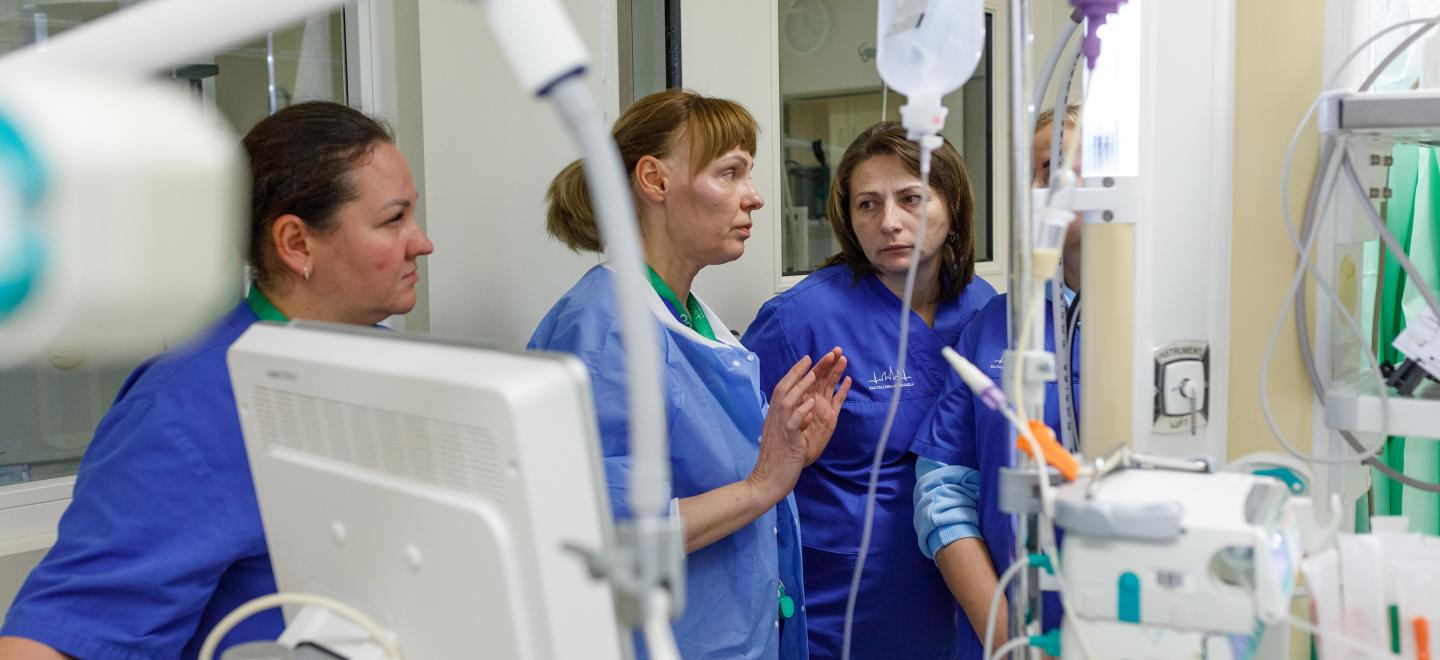
VS: We were highly impressed by the training system for prison staff, the level of digitalisation in the educational process and the professionalism of the teachers at the Estonian Academy of Security Sciences. However, what stood out to us the most was the internship at the prisons in Tallinn and Viru. We had the opportunity to observe how the teachings at the Estonian Academy of Security Sciences are applied in the daily work of the staff. We were particularly impressed by the systematic approach, compassion and professionalism with which Estonian specialists carry out their duties. This clearly demonstrates how security and respect for human dignity can and should coexist.
“Estonia knows what it means to embark on reforms in a situation where resources are scarce and expectations are high. That is why we can give Ukraine very practical advice on how to make major changes in a short time so that they meet European Union requirements. Together we will strengthen and expand the European space of values and security," said Eva-Maria Liimets, ESTDEV's programme manager for Democracy and Rule of Law.
What have you found most valuable or interesting about the Estonian prison service or its training system?
VS: The most valuable aspect of training is the combination of theory and practice. At the Estonian Academy of Security Sciences, the training follows a competency-based approach, where cadets learn to respond to real-life situations. The programme focuses on developing professional ethics, communication skills, teamwork and psychological resilience. It utilises a modern training model that prepares individuals to be effective executors and responsible professionals who can think critically and make informed decisions. This, in turn, positively impacts the effectiveness of the prison system.
How do you think the knowledge and experience gained here could be applied in developing the Ukrainian training system?
VS: We are working on updating the training programme for prison staff, integrating the experience gained into the educational process. We are adapting European methods and approaches to fit the Ukrainian context in order to make our staff training more modern and practical.

Volodymyr Spivak. Photo: Ukraine's Academy of Penitentiary Service.
How would you describe the cooperation and interaction with Estonian colleagues?
VS: The collaboration was remarkably open and friendly. Our colleagues from Estonia demonstrated high levels of professionalism, a willingness to share their experiences and a genuine interest in achieving a successful joint outcome. An atmosphere of goodwill and mutual understanding was present throughout all stages of the project, from training at the Academy to internships in prisons.
We would like to extend our sincere gratitude to the Estonian Ministry of Justice, the Ukrainian Ministry of Justice, the Estonian Academy of Security Sciences and the Penitentiary Academy of Ukraine for allowing us to participate in this project. Additionally, we are grateful to the people of Estonia for their support, hospitality and partnership.
If you had to describe this visit in one word or phrase, what would it be and why?
VS: The slogan would be: “European unity in action”. This visit has demonstrated how collaboration, mutual trust and respect can transform ideas into real change. We learn from one another and strive to create a future focused on people, their dignity and their rights.
This interview was first published on 29.10.2025 on the Estonian Prison Service website.
Seotud artiklid