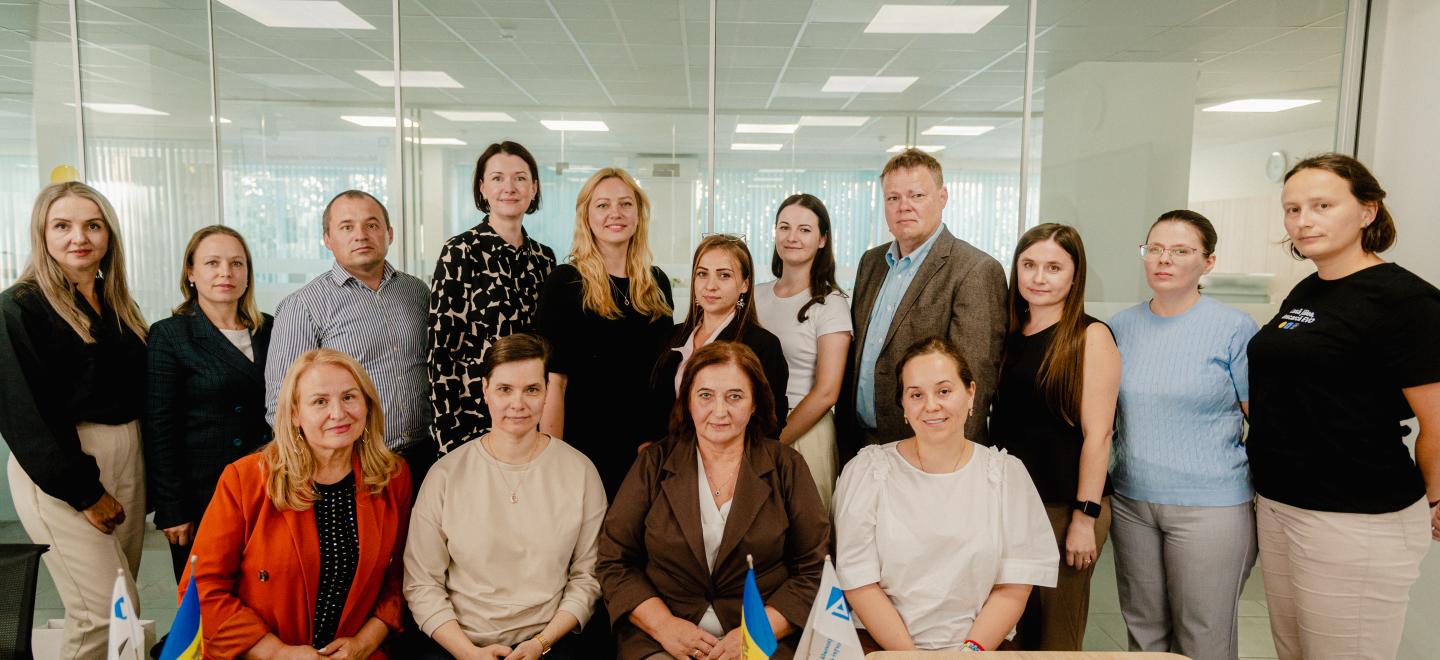
Estonian and Dutch expertise sets the stage for practical reforms in Moldova’s agrifood sector

An EU-funded agrifood Twinning project, implemented by Estonia and the Netherlands, is helping shift Moldova from policy ambition to hands-on institutional reform, moving the country one step closer to EU accession.
In its first year, the project delivered concrete steps toward modernising Moldova’s agricultural data systems and payment administration. Estonian and Dutch experts worked alongside Moldovan institutions to map out a structured reform agenda aligned with national priorities and EU requirements. That groundwork exposed several systemic bottlenecks in Moldova’s agricultural governance: understaffing at both the Ministry of Agriculture and Food Industry (MAFI) and the National Agency for Interventions and Payments in Agriculture (AIPA), as well as outdated or fragmented digital tools. These gaps have long hindered Moldova’s ability to collect, analyse and report reliable agricultural data - information that is essential for EU‑compliant policymaking.
Beyond identifying the challenges, the project’s first year established a collaborative working model built on continuous, hands-on support rather than one-off recommendations. Agnes Naarits, the resident Twinning advisor from the Centre of Estonian Rural Research and Knowledge (METK), who arrived in Chișinău in February 2025, highlighted this approach: “This project aims to ensure that agriculture in Moldova becomes more modern, fair and supportive for farmers, which benefits the whole country. It also means continued support from Estonian and Dutch experts; they won’t just give recommendations and leave. They will stay involved, helping staff step by step, answering questions and making sure new tools and procedures actually work in real life.”
With this foundation laid, the second year marks a decisive turn from planning to implementation. The focus now is on converting recommendations into practical upgrades in data management, monitoring systems and payment administration. A key element of this phase will be a series of study visits scheduled for spring and summer 2026, during which AIPA and MAFI officials will travel to Estonia to observe how comparable systems operate inside an EU member state. These exchanges are intended to accelerate learning and support the adaptation of proven solutions to Moldova’s context.
“In the not-so-distant past, Estonian farmers also had to apply for subsidies in person, juggling stacks of paper and wasting precious time. Our experience shows that systems can be transformed. Now it’s our turn to share that experience with Moldova and support its path toward the EU,” said Margus Gering, ESTDEV’s regional head for Europe.
The project continues to draw strength from a broad institutional partnership led by the Estonian Centre for International Development (ESTDEV), together with key Estonian agencies including METK, the Agricultural Registers and Information Board (ARIB), the Ministry of Regional Affairs and Agriculture, and its Information Technology Centre (REMITK). According to ESTDEV’s project lead, Galina Uibos, this diversity strengthens outcomes: “This Twinning project benefits from the different perspectives brought by all partners. This type of professional exchange has been very rewarding.”
Looking ahead, the second year is expected to deliver visible, on‑the‑ground improvements - modernised digital tools, more efficient administrative processes and stronger institutional capacity. Together, these advances will bring Moldova’s agricultural sector closer to EU practice and better position the country for future funding opportunities.
The budget for the “Twinning Agrifood – Strengthening sector monitoring, data management and payment administration” project is 900,000 euros. The initiative runs until February 2027.
Related articles