Nine projects in three African countries to receive funding after 2026 call for proposals

The Estonian Centre for International Development (ESTDEV) has announced the results of its 2026 African call for proposals. ESTDEV will fund nine new projects in Kenya, Uganda and Zambia this year, with a budget totalling nearly €840,000.
The goal of the call was to support the development of Estonia's priority partner countries - Botswana, Kenya, Namibia, Zambia, Tanzania, and Uganda - by focusing on innovation in the digital and green transition, systemic changes in education and the development of digital skills. It also emphasised advancing e-governance and cybersecurity, as well as empowering women and girls.
Katrin Winter, ESTDEV's regional head for Africa, explained that the thematic focus areas are based on sectors where Estonian experts and organisations already have proven experience in Africa and where there is clear interest from partner countries. These guidelines also allow Estonian projects to connect with broader European Commission support and funding, thereby increasing the impact of Estonia's contributions.
"Linking projects funded under this call with larger European initiatives allows us to scale models that have already proven successful in Estonia and are clearly needed in the African context. These models work effectively within development cooperation through collaboration between Estonian and local partners. It is encouraging to see that many projects build on previously initiated cooperation and address systemic changes with impacts that extend beyond a single project," said Winter.
For example, the continuing education format of kood/Jõhvi will be expanded to train IT talent according to labour market needs; the Vivita learning model will be introduced in schools to increase girls' access to STEM education; and Garage48 and Latitude59 will continue their entrepreneurship support activities, which are already successful in Kenya, in a new target country.
This year’s funded projects
NGO Mondo’s project supports the development of digital skills of Ugandan educators and strengthens the leadership capacity of teachers and education leaders in rural Uganda to improve teaching quality and institutional governance.
Grant amount: €142,417
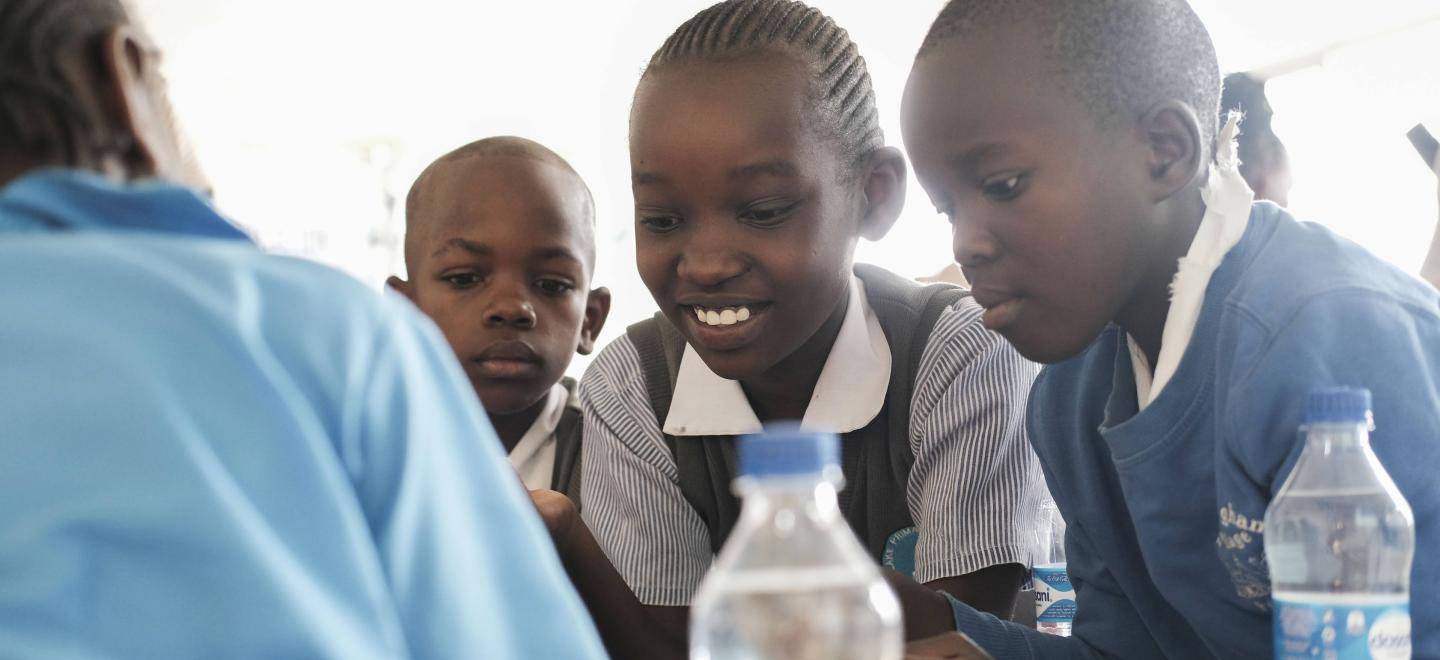
Vivita Solutions Laboratory will implement a project called "Girls Create the Future: From Idea to Prototype in Uganda and Kenya." The project brings Vivita's evidence-based prototyping methodology to schools in Kenya and Uganda to increase girls' interest and competence in STEM fields. The "From Idea to Prototype" programme will be piloted in eight schools over nearly two years.
Grant amount: €135,269
Garage48 will run a twin transition startup programme in Zambia to provide startup founders with the support and tools needed to create companies based on the principles of the twin transition (digital and green), using digital solutions to address environmental and economic development challenges.
Grant amount: €95,112
NGO Mondo aims to increase the skills and interest of 300 girls in STEM subjects in Kisumu County. In cooperation with TalTech and a local volunteer community (CVIS), teacher training will be conducted in six schools based on TalTech's adapted science education curriculum.
Grant amount: €94,909
Tuleviku Tehnoloogiaharidus (kood/Jõhvi) will continue kood/Nairobi, its programming school in Nairobi, with a new study cycle, contributing to the modernisation of Kenya's education system by equipping students with future skills aligned with the needs of the labour market and digital economy. In cooperation with Kenyatta University, IT education will continue, and collaboration networks between educational institutions, learners, and companies will be created.
Grant amount: €80,000
European Cybersecurity Initiative (ECSI) aims to strengthen Kenya's cyber incident response capacity by promoting cooperation, conducting joint exercises, and improving operational readiness across stakeholder groups (cyber governance, general governance, private sector, academia). Beneficiaries include cybersecurity authorities, ministries, the private sector, critical infrastructure organisations, and academia.
Grant amount: €75,355
Latitude59 Green & Digital Bridge projects aims to strengthen the innovation ecosystem in Uganda and Zambia for the digital and green transition. The project supports the creation of a sustainable cross-border innovation ecosystem model between Uganda and Zambia, strengthening the capacity of local support organisations.
Grant amount: €74,964
The Estonian Business School aims to strengthen disease surveillance and outbreak preparedness in Uganda. The project supports the resilience and prevention capacity of Uganda's public health system by combining scenario-based planning and predictive analytics to enable proactive preparedness and decision-making. Activities focus on strengthening the digital competencies, cybersecurity and data management skills of key personnel, and on integrating user-friendly analytical tools into national surveillance systems.
Grant amount: €74,645
BCS Training’s project "CYBERBRIDGE Kenya” will support women's participation in Kenya's cybersecurity sector by creating a sustainable skills development model. It includes developing an entry-level training programme for junior cybersecurity specialists validated by employers and a flexible learning model. A pilot group of 25 female participants will undergo training followed by internships in companies.
Grant amount: €66,984.4
ESTDEV's operational programme in Africa is based on the objectives of Estonia's Foreign Policy Development Plan 2030, the Development Cooperation and Humanitarian Aid Strategy 2024–2030, and Estonia's Regional Strategy for Africa. In identifying cooperation opportunities, ESTDEV is guided by the needs and development goals of its priority partner countries, focusing on areas where Estonia can provide strong added value, such as supporting educational innovation, accelerating digital and green transitions, and fostering entrepreneurship.
Related articles