ESTDEV project brings entrepreneurship education to 15 Ukrainian vocational schools
Estonia’s entrepreneurship education model is currently being used in 15 Ukrainian vocational schools. Nearly 2,650 students have gained vocational skills and the knowledge needed to start a business within a labour market transformed by the war.
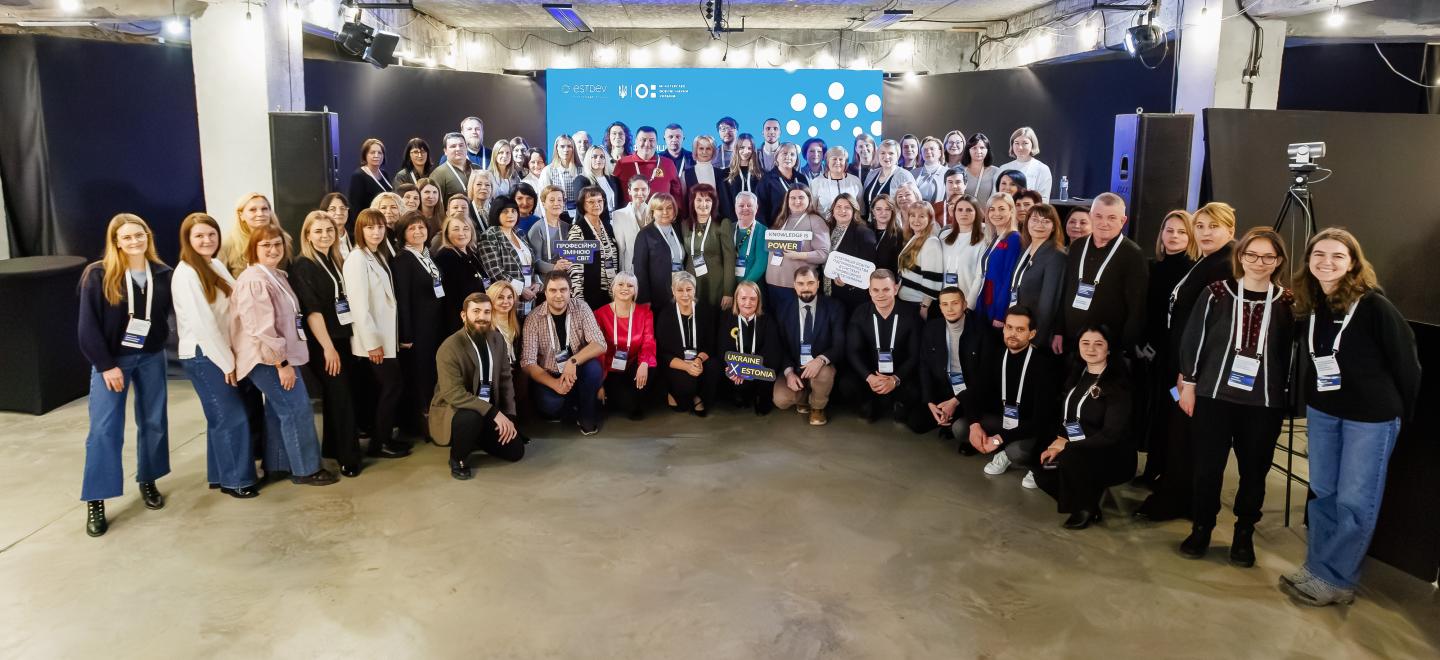
The Estonian Centre for International Development (ESTDEV) project, “Integrating Entrepreneurship Education into the Ukrainian Vocational Education System,” has been so successful, Ukraine is now considering implementing entrepreneurship education in vocational schools nationwide. On November 23, a conference was held in Lviv, Ukraine, to summarise the project’s results and discuss how to implement entrepreneurship education more broadly across Ukrainian vocational schools.
The conference opened with remarks from Andrea Kivi, ESTDEV’s executive director, who noted that developing entrepreneurship education is about fostering self-confidence. “Amidst a full-scale war, many Ukrainians must find new ways to develop their careers and, if necessary, retrain. Entrepreneurship education offers individuals the chance to turn a new page in their lives and take the initiative,” Kivi said. She added that in Ukraine, investing in education and people is also an investment in the country's resilience and recovery.
Through the project, which began in September 2024, entrepreneurship education has been introduced in 15 vocational schools across the Zhytomyr, Rivne, and Lviv Oblasts, involving approximately 2,650 students. Workshops have been run for teachers, three sets of study materials in Ukrainian are currently being finalised and cooperation between vocational schools and businesses has been strengthened. The curriculum, based on the Estonian entrepreneurship education programme Edu ja Tegu (Success and Action), has been adapted to meet Ukraine's needs.
Throughout the day, representatives from various Ukrainian regional governments, educational institutions and businesses discussed the role of entrepreneurship education within vocational training. They shared the experiences of the schools and mentors who participated in the pilot project. Kivi highlighted the role of teachers, noting: “A teacher might be the first person to tell a young person, ‘Your idea matters.’ This sense of being trusted can stay with an individual for a long time.”
Discussions at the end of the conference focused on what is required to ensure that an entrepreneurial mindset and entrepreneurship education reach all vocational institutions across Ukraine, rather than being limited to the pilot schools.
“We now have results from the project, and we will integrate them into the Ukrainian education system. Estonia possesses unique experience in entrepreneurship education, and when you have such unique experience, it should be shared, which is exactly what Estonia has done with Ukraine. Entrepreneurship education is about taking initiative and finding new paths,” said Iryna Shumik, the director general of the Directorate for Vocational Education at the Ministry of Education and Science of Ukraine. “The experience from the pilot schools shows that entrepreneurship education works when teachers, schools and businesses collaborate. Our task now is to ensure that this experience reaches all vocational schools in Ukraine, not just those that have participated in the project.”
This collaboration also extends to universities. At Ivan Franko Zhytomyr State University and V. N. Karazin Kharkiv National University, both current and future teachers were trained to help students generate their own ideas and bring them to life. In Zhytomyr, a module on entrepreneurship pedagogy—developed with the Estonian model in mind—was incorporated into two master's degree curricula. In Kharkiv, a micro-credential programme in entrepreneurship pedagogy was developed and piloted with support from mentors at Tallinn University. Participants also created practical business case studies and their own entrepreneurship education projects, which can be used in future teaching.
The project will run until December 31, 2026, with a budget of 402,500 euros.
Related Articles